How to start a footwear collection program
Somewhere right now in your house is a pair of shoes you've not worn for over a year. Suppose you multiplied that by every house in your neighborhood school district office building you would get thousands pairs sitting in the closet instead of on feet that actually need them. That is the gap between unused and useful that a footwear collection program seeks to close.
You don't need to be the most sophisticated person to set up a collection box, only that doing a good job is not sufficient for you to take out a box of the cardboard type and just put it there.
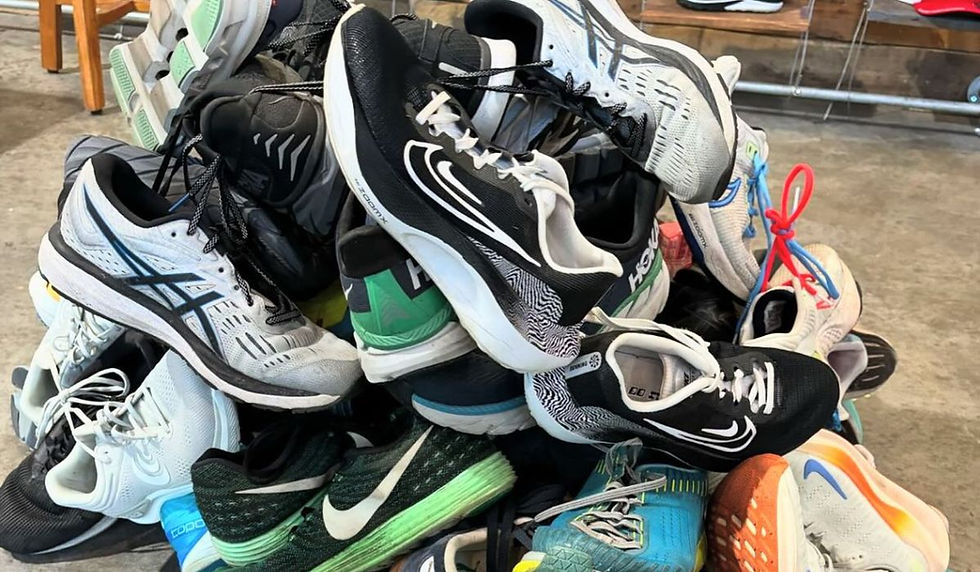
Why Footwear Collection Programs Matter More Than People Realize
Shoes are probably the most difficult textile items to recycle because they consist of multiple layers that are usually stuck together with glue: rubber, foam, leather, mesh, glue. Which is why so many of them end up in landfills instead of being recycled.
Lets get real through some numbers:
A single pair of shoes will stay intact (in a landfill) for about 30, 40 years before it starts decomposing.
The footwear industry has some of the highest carbon footprints among all industries, because different materials have to be glued/attached together which is very energy-consuming.
Millions of shoes that can perfectly be worn are thrown away every year simply because people don't think of handing them over easily.
Collection and reutilizing programs can really save the shoes before they even start their way to landfills and then redirect them to either reuse, resale, material recovery channels. What a different and better result compared to simply throwing things away!
Step 1: Define the Purpose of Your Program
Before setting up one bin, think about the definition of "success". Footwear collection programs normally fit in one of three categories:
Donation-orientated programs
Donation-orientated programs aim only at collecting shoes to help people in need through their shelters, disaster relief efforts, or underserved communities.
Recycling and Material Recovery Programs
Discarded footwear is broken down to their materials, which in turn serve other purposes as new surfaces, playground surfaces made from recycled rubber, or floorings made with recycled foam, for example.
In many cases, effective and long-lasting projects are a blend of these three types: usable shoes get a second life through reuse or resale, whereas the rest get recycled and thus prevent their dumping and degradation.
Having settled the blend of three aspects that best fit your vision, other aspects of your program like collection bins or selection of partners will be naturally determined.
Step 2: Choose Your Collection Model
There's no single perfect way for collecting shoes; your chosen way depends on your resources and your audience.
These are the most typical examples:
Containers that receive shoes placed at places where people pass by a lot like at a gym, a school, or an office lobby
Bulk collections held at certain times, such as after a season, when one sport is about to resume, or right before the new school year starts
Programs allowing the participant to get a pre-paid label or bag, then mail the shoes to the collector
Agreements with pickup services where collectors do the logistics for you
If you conduct the activity through a school or at your organization, you usually find that the best way is a combination of drop-off bins and collection drives; the bin keeps it going between large promotions.
Step 3: Set Clear Guidelines for What You'll Accept
A lack of good quality directions are the leading reason collection programs end up with an overload of donations that have no value to the organization. Be specific right from the beginning.
An acceptable policy of collections normally will state things such as:
Conditions standards will be based on items that are slightly worn and in good condition vs. clearly damaged or moldy ones.
Tying the pairs shoes together using either string or tying them so pairs don't get separated during shipping;
Clearly identifying different types of shoes such as Recyclable Sneakers, boots, sandals, and cleats; they are often classified separately;Placing the collection guidelines beside your bin or flyer not only will save time to sort in later but it will also keep the flow at its peak level.
Step 4: Find the Right Downstream Partner
This is the part that most people don't realize the importance of. After the shoes are collected, they still need to be graded, sorted, and routed out to reuse, resale, or recycling, and that is something real infrastructure is needed for, not just good intent.
If any organization is focused on precisely that stage, then a group like Sneaker Impact is that. They not only collect gently worn shoes but also funnel them out to micro-entrepreneurs in developing communities through selling networks that help them get an extra job or a way of support, while still keeping the pair away from the dump.
A footwear recovery organization, partnering with your program would mean that you wouldn't have to set up sorting and distribution operations on your own; instead, your initiative can connect to a ready-made supply chain of services that already function smoothly and reliably for the company.
Here are the factors you should check when assessing whether the footwear recycling organization can work:
1. Does the company actually take responsibility and tell where the shoes will go in the end?
2. Does it support you with free shipping in advance or by collecting the items themselves if you are unable to arrange it?
3. Are the company and its recycling partners able to provide data on the environmental and social impact of each recovery program such as the number of shoes gathered, CO2-equivalent reduced by reuse, communities served which would not otherwise be possible if not for such a program?
A trustworthy partner should be able to answer all three without hesitation — and behind every one of those answers is a process most people never hear about called shoe grading, the step that actually determines whether a donated pair gets resold, repaired, or recycled. If you want to understand how that decision gets made before it happens to your donations, this breakdown of what shoe grading is and why it matters is worth a read.
Step 5: Promote the Program Where People Already Are
Your company's collection bin that no one even knows about is simply a piece of furniture. To effectively use promotion you don't really need to spend a lot of money if all you get in the end is just the money itself. What's required is the right time to get in touch with people.
Make your launch date match the timing of a meaningful event: back to school time, marathon races, doing spring cleaning, or wellness week in your work
Provide clear, short, visual signs near the collection bin explaining what the bin accepts in great detail
Post a quick update on the impact after a few weeks people participate more when they see early results
One often neglected idea: link the program to a totally free incentive, like giving a shoe store a small discount if the customer donates a pair. In this way, the act of charity becomes an exchange rather than it being an altruistic single action.
Step 6: Track and Share Your Impact
The programs that have measurable outcomes usually remain in place for longer than those that don't have measurable results. It is always useful to measure at least a few things:
Number of pairs gathered
Weight that is estimated from landfill
Destination of shoes (refurbishment, second-hand selling, recycling)
If you publish the outcome even in very informal channels, be it a newspaper or a local board of announcement then a mere short event will become an activity that one would regularly take part in and thus, become the habit of the person that the person will not want to break.
Final Thoughts
In terms of footwear collection initiatives, the success or failure of an effort basically depends on the rather boring elements: precise directives, a trustworthy partner, and steady commitment.
None of that requires a big budget as well as full-time professional staff; one just needs the basic blueprint of a footwear donation event and then to carry it out over several stages.
Recyclable sneakers stacked up in your neighborhood aren't waste looking for trouble, they are the resources that need a system that knows their right place.
Even the simplest system allows the old shoes to be a meaningful contribution to someone else and thus be a great reason to keep on collecting.
Frequently Asked Questions
How many shoes do I need to start a collection program?
Besides a few basic requirements for the space and materials, the number of shoes you will need is flexible. Some collect 1 shoe at the beginning and then gradually collect more as the donation volume increases and/or the storage capacity allows.
What types of footwear can be collected?
It depends on the type of programme and how the donated materials will be used, but generally, the collected shoes are in good condition and suitable for reselling. Foot apparel for athletic and casual use, boots, sandals, flip flops, and cleats may all be collected and donated as a pair or even a single shoe, though some types may require different treatment due to the way they are made and hence the different recycling processes.
Can damaged or worn-out shoes still be donated?
In some programmes, damaged and worn shoes are accepted, though they tend to be sent for the recycling of their individual components rather than being donated or sold. However, you might need to consult your collection partner before making a donation so that you will know whether they will accept such kind and which is the best way to make the donation.
Is a footwear donation program an expensive operation?
Not at all. You can get away with just a few simple measures such as a few bins, some signs, and the help of volunteers which all add up to small budget expenses. On most occasions, your expenses will increase significantly if you are alone in the whole process of shipping and there's no outside assistance.
How long will it be before results appear from a collection drive?
The majority of collection drives usually get enough donations to be considered worthwhile within the first two to three weeks. It is even better if marketing is done during a time that is most suitable for the occasion, i.e., the launch of a seasonal campaign.
Comments