What to Eat for More Vitamin-D in Winter
Winter cuts the easiest source of vitamin D. Shorter days, cloud cover, and more time indoors mean your skin makes less from sunlight. That puts more weight on the diet. If you know which foods high in vitamin d really count, you can build meals that help maintain healthy levels without guessing.
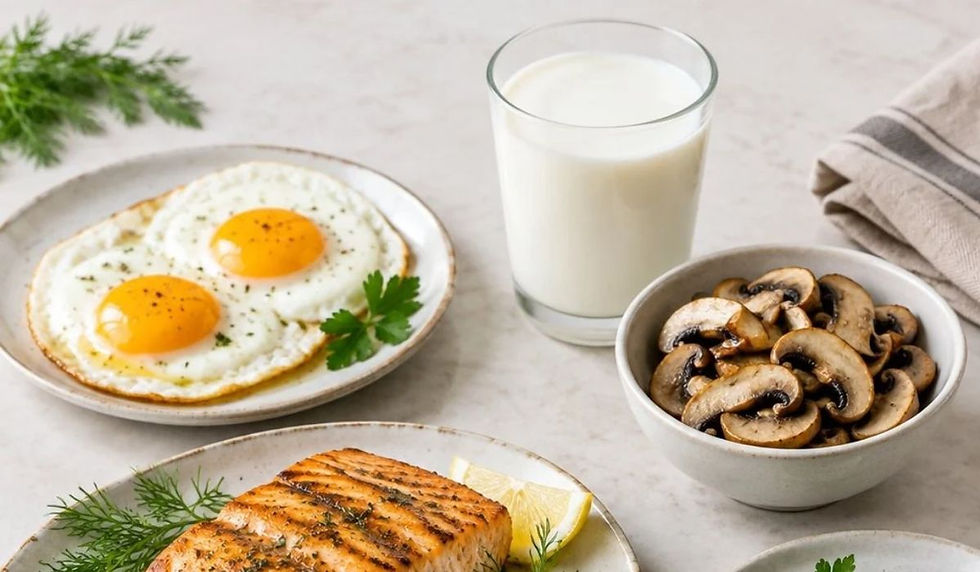
Why Winter Makes Vitamin D Harder To Get
Vitamin D helps your body absorb calcium and supports bone strength and immune function. Your body makes it when UVB hits skin, but above 37 degrees latitude, the sun angle from November to February is too low for efficient production.
You also cover more skin and spend less time outside at midday. Few foods naturally contain much vitamin D, so winter choices matter more.
Foods High In Vitamin D That Help In Winter
A short list tops U.S. data from the NIH Office of Dietary Supplements.
Fatty Fish and Seafood
Fatty fish gives the most per serving. Sockeye salmon, cooked, 3 ounces, offers about 570 IU, or 71 percent of the Daily Value of 800 IU. Farmed Atlantic salmon is lower, around 400 to 440 IU per 3.5 ounces, but still strong.
Rainbow trout, mackerel, and sardines are also strong. Canned tuna provides 40 to 150 IU per 3 ounces by brand. Cod liver oil has over 1,300 IU per tablespoon.
Egg Yolks And Cheese
One large yolk has about 37 to 44 IU. Pasture raised eggs can be a bit higher. Cheddar has around 12 IU per ounce. Small amounts add up if you eat dairy regularly.
Mushrooms Exposed to UV Light
Mushrooms are the only plant food that can make vitamin D. White mushrooms exposed to UV light can provide 400 IU or more per half cup. Look for "UV-exposed" or "vitamin D-enhanced" on the label. Untreated mushrooms often have under 20 IU.
Fortified Foods Worth Checking
Most U.S. cow milk is fortified to 100 to 120 IU per cup. Soy, almond, and oat milks often list 100 to 144 IU per cup. Fortified orange juice can add 100 IU per cup.
Fortified cereals vary from 40 to 100 IU per serving. Fortified yogurts often add 80 IU per 6 ounces. Check labels because amounts differ by brand.
How Much Food Can Cover, and Where Gaps Remain
The allowance is 600 IU per day for adults 19 to 70 and 800 IU for adults over 70. One serving of sockeye salmon covers most of that. Two eggs, a cup of fortified milk, and half a cup of UV mushrooms give roughly 200 to 500 IU.
Many people north of Atlanta still fall short in winter without planning. Vegetarian, dairy-free, or low-fish diets lower totals further. If you are looking at supplements, this guide on how to choose daily vitamin packs for your health needs explains how to match format and dose to your routine.
How Personalized Wellness Programs Address Vitamin D Needs
Online nutrition advice is broad. Your needs are not. Age, location, diet pattern, sun exposure, and health goals shift how much vitamin D matters and how you should get it.
That is where personalized wellness programs help. Instead of a one-size-fits-all list, a program looks at your baseline, habits, and goals and builds guidance around them.
Just Right takes this approach with physician-developed programs grounded in current clinical evidence. It offers three programs for vitamin D, GLP-1 support, and healthy aging, each designed to match your body and goals.
Putting It All Together For Winter
Winter does not have to mean low vitamin D. Start with fatty fish twice a week, add eggs and UV mushrooms, and use fortified milk, plant milks, juice, or cereal to fill gaps. Track what you eat for a week to see if you reach 600 to 800 IU.
If intake stays low, bring your log to your clinician. A focused talk about foods high in vitamin D and testing can point to the right next step.
FAQs
Which Food Has The Most Vitamin D Per Serving?
Sockeye salmon and UV mushrooms rank highest. Sockeye at 3 ounces gives about 570 IU. UV white mushrooms give 400 IU or more per half cup. Cod liver oil is higher per tablespoon but used in small amounts.
Can I Get Enough Vitamin D From Food In Winter Without Supplements?
Some can if they eat fatty fish twice weekly and use fortified foods daily. Many in northern states fall short from December to February and should discuss testing and supplements with a clinician.
Are Fortified Foods As Effective As Natural Sources?
Yes, for raising intake. Both D2 and D3 are used. Your body uses both, though D3 is often slightly more potent for raising blood levels. The total daily amount matters more than a single source.
Do Mushrooms Need To Be Labeled UV Exposed?
Yes. Regularly indoor-grown white mushrooms have little vitamin D. Look for UV-exposed, sun-exposed, or vitamin D-enhanced. Sun-dried shiitake can also be higher.
How Should I Store and Cook Vitamin D-Rich Foods?
Keep fish cold and cook to 145 degrees F. Vitamin D is heat stable, so baking and sautéing do not destroy it. Refrigerate UV mushrooms and use within days. Keep milk and juice refrigerated and check dates.


Comments